

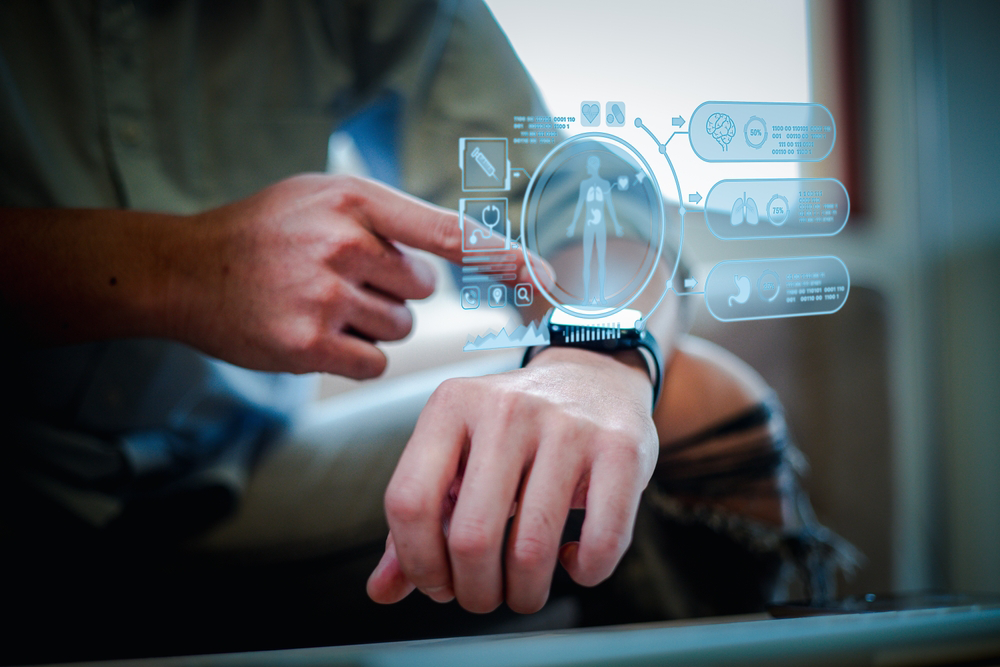

Smart wearables represent the future of preventive care through their ability to continuously monitor health and deliver personalized perspectives. These devices enhance chronic disease management, support early intervention, and nurture proactive patient engagement. Predictive analytics and advanced sensor technology further enable healthcare providers to anticipate risks and tailor treatment plans. As integration with electronic health records improves, the full potential of wearables in promoting better health outcomes becomes clearer. Exploring this topic reveals even more revolutionary possibilities.
Highlights
- Smart wearables enable continuous health monitoring, allowing for early detection of potential risks and timely interventions in preventive care.
- Remote patient monitoring significantly reduces hospital readmissions and chronic disease progression, enhancing overall patient outcomes and lowering healthcare costs.
- Predictive analytics and AI-driven insights from wearables provide personalized health recommendations, tailoring care to individual needs and lifestyle factors.
- The growing integration of wearable data into electronic health records will enhance healthcare efficiency and personalization, making preventive care more effective.
- Increasing acceptance of digital health tools among physicians encourages further adoption of smart wearables, driving innovation in preventive healthcare strategies.
Adoption Trends in Smart Wearables
The adoption trends in smart wearables reveal significant generational shifts and growing market potential. Millennials lead wearable adoption, with user numbers projected to rise from 25.8 million in 2020 to 27.6 million by 2024. Conversely, Gen Z is quickly narrowing the gap, indicating a strong enthusiasm for technology and health, reaching 20.5 million users in the same timeframe. Meanwhile, Baby Boomers display slower growth, hinting at an untapped market of health-focused features. A recent analysis shows that wearables’ health-monitoring capabilities significantly benefit older consumers, encouraging tech companies to reframe wearables as necessary health tools. The global market is valued at $84.2 billion in 2024, expected to reach $186.14 billion by 2030, driven mainly by health wearables’ shipment success demands. As these market trends unfold, the global smart wearables market will increasingly accept smart wearables, enhancing their health-conscious travels.
The Role of Predictive Analytics in Health Monitoring
While traditional health monitoring often relies on episodic assessments, the integration of predictive analytics revolutionizes continuous health management. By employing predictive modeling, wearable devices can continuously track crucial signs, detecting deviations that signal potential health risks. This proactive approach enables personalized medicine, providing actionable information customized to individual needs. Advanced sensors facilitate early detection of preclinical indicators for various diseases, allowing for timely interventions and lifestyle adjustments. Through AI/ML-driven analytics, users receive personalized recommendations that further enhance well-being. Additionally, as data is aggregated securely in encrypted cloud platforms, predictive accuracy improves, promoting a sense of belonging among users who can feel confident that their unique health path is being actively monitored and supported, facilitating healthier outcomes for all. Predictive analytics monitors real-time patient data, enabling tailored healthcare programs based on the individual’s needs and behaviors. The evolution of wearables, with their clinical accuracy, ensures that users benefit from insights that were previously unavailable in traditional monitoring systems. Furthermore, the use of wearable tech allows for early detection of health issues, significantly improving intervention chances.
Enhancing Chronic Disease Management With Wearable Technology
Wearable technology has emerged as a powerful tool for enhancing chronic disease management, providing patients and healthcare providers with unrivaled access to real-time health data. By facilitating personalized medicine, wearables enable patients to engage actively in their health path. For example, continuous glucose monitors optimize diabetes care, while cardiac wearables detect arrhythmias and monitor hypertension trends. These devices not only improve disease prevention but also enhance patient adherence through real-time feedback and medication notifications. Remote patient monitoring allows clinicians to intervene promptly, reducing hospital visits and ensuring proactive care. With features like shared care portals, wearables promote collaboration between patients and providers, and consequently build a supportive community essential for effective chronic disease management. Additionally, wearable devices have proven effective in monitoring hypertension, demonstrating their transformative impact on health care. This integration of wearable device data into patient care allows for bio-individualized approaches that consider each patient’s unique lifestyle factors and physiological functions. Given that chronic diseases account for 73% of deaths worldwide, addressing their management through wearables is increasingly critical for improving health outcomes.
Innovations in Sensor Technology for Continuous Monitoring
As health monitoring continues to evolve, innovations in sensor technology are playing a vital role in facilitating continuous and non-invasive tracking of essential health metrics. Recent biosensor applications, such as sweat sensors, enable the analysis of dehydration and electrolytes while providing perspectives into stress and fatigue. Core body temperature monitoring aids in fever detection and athletic performance enhancement. Electrodermal activity (EDA) sensors evaluate skin conductivity to gauge mental health, supported by AI-driven interpretation. These advancements highlight the potential of sensor innovations in promoting comprehensive health monitoring, from glucose tracking to posture analysis. Such technologies enable individuals to take charge of their well-being, nurturing a sense of community focused on proactive health management and shared experiences. Furthermore, these novel biosensors are paving the way for non-invasive glucose monitoring to enhance diabetic care and management. With advanced sensors being integrated into wearables, consumers can benefit from more accurate health assessments than ever before. The integration of real-time data collection in these wearables allows for immediate feedback, significantly enhancing the user experience and encouraging proactive health decisions.
Advancements in Maternal Health Monitoring Solutions
Advancements in maternal health monitoring solutions are revolutionizing prenatal care by offering continuous and personalized tracking of both maternal and fetal well-being. Wearable devices now enable 24/7 vital sign monitoring, identifying risks such as hypertension and gestational diabetes early. Furthermore, approximately 200 million people experience pregnancy annually, highlighting the need for effective monitoring solutions. With high adoption rates among pregnant women and a willingness to invest in these technologies, maternal wellness is increasingly prioritized. Automated alerts facilitate timely medical interventions, bridging gaps that can occur between routine check-ups. Moreover, the integration of machine learning allows for real-time behavior modifications, enhancing health outcomes. This transformative approach not only allows for detailed insights into the dynamics of pregnancy but also supports a community of informed and engaged users committed to maternal health. Additionally, wearable technology is being utilized to track maternal risks like postpartum hemorrhage, which could significantly improve outcomes for mothers and infants alike. Furthermore, the research conducted by the North Carolina Institute for Climate Studies demonstrates the importance of understanding the use of wearable sensors in pregnancy health monitoring.
Overcoming Data Sharing and Integration Challenges
While the potential of smart wearables in preventive healthcare is significant, overcoming data sharing and integration challenges remains a critical hurdle. Achieving effective interoperability solutions is essential for integrating wearable data with electronic health records (EHRs). Current standardization barriers and proprietary formats complicate data integration, often leading to high costs and inefficiencies. Furthermore, ensuring data security through robust encryption protocols is necessary to safeguard sensitive health information amidst rigorous regulatory demands like GDPR and HIPAA. Continuous monitoring and real-time data analysis support a proactive approach to healthcare, emphasizing the need for integration. Additionally, the use of wearables can personalize medicine and advance digital health initiatives, further highlighting their importance in preventive care strategies. Moreover, wearable sensor devices can generate data that automates processes of care, reinforcing their potential role in enhancing preventive health measures. The lack of universally accepted standards impedes seamless collaboration across healthcare platforms, thereby limiting the clinical utility of data. Addressing these challenges is vital for realizing the full promise of smart wearables in delivering comprehensive, personalized preventive care.
The Impact of Remote Patient Monitoring Post-Pandemic
The rise of smart wearables has propelled the adoption of remote patient monitoring (RPM) as a revolutionary force in post-pandemic healthcare. Drawing critical pandemic lessons, stakeholders recognized the need for enhanced healthcare accessibility and flexibility. With a staggering 1,294% surge in RPM claim volume from 2019 to 2022 and projections suggesting that 71 million Americans will engage with RPM by 2025, the trend is unmistakable. Timely interventions promoted by RPM diminish chronic disease progression risks, substantially reducing hospital readmission rates by 85%. Furthermore, the increased physician acceptance of digital health tools highlights a substantial shift in the overall healthcare landscape. As 75% of doctors have adopted some type of remote patient monitoring, patients’ preferences lean toward ongoing virtual care to mitigate infection risks, indicating an extraordinary shift in engagement. This technology not only enables self-management but also lays a foundation for cost-effective care that supports positive health outcomes for future generations.
Conclusion
In summary, smart wearables represent a revolutionary shift in preventive care, leveraging advanced technologies to enhance health monitoring and chronic disease management. As adoption trends soar and innovations in sensor technology emerge, these devices promise to provide pertinent information into individual health. However, overcoming challenges related to data sharing and integration remains vital for maximizing their potential. Ultimately, the integration of smart wearables into healthcare signifies a proactive approach to wellness, nurturing improved patient outcomes in a post-pandemic world.
References
- https://www.ishir.com/blog/199612/ai-and-wearable-health-tech-real-time-insights-for-preventive-care.htm
- https://novosound.net/wearable-health-tech-is-the-industry-to-watch-in-2025/
- https://healthsciences.arizona.edu/news/stories/smart-sensors-and-smarter-health-how-ai-and-wearables-are-reimagining-preventive-health-care
- https://www.jmir.org/2025/1/e63879
- https://pmc.ncbi.nlm.nih.gov/articles/PMC12059502/
- https://scoop.market.us/smart-wearables-statistics/
- https://www.emarketer.com/content/millennials-lead-wearable-tech-gen-z-adoption-grows
- https://www.grandviewresearch.com/industry-analysis/wearable-technology-market
- https://scoop.market.us/wearable-technology-statistics/
- https://www.prnewswire.com/news-releases/wearable-technology-market-to-grow-by-usd-99-4-billion-from-2025-2029–boosted-by-the-popularity-of-wearable-devices-as-a-payment-method-ais-impact-on-market-trends—technavio-302362894.html