

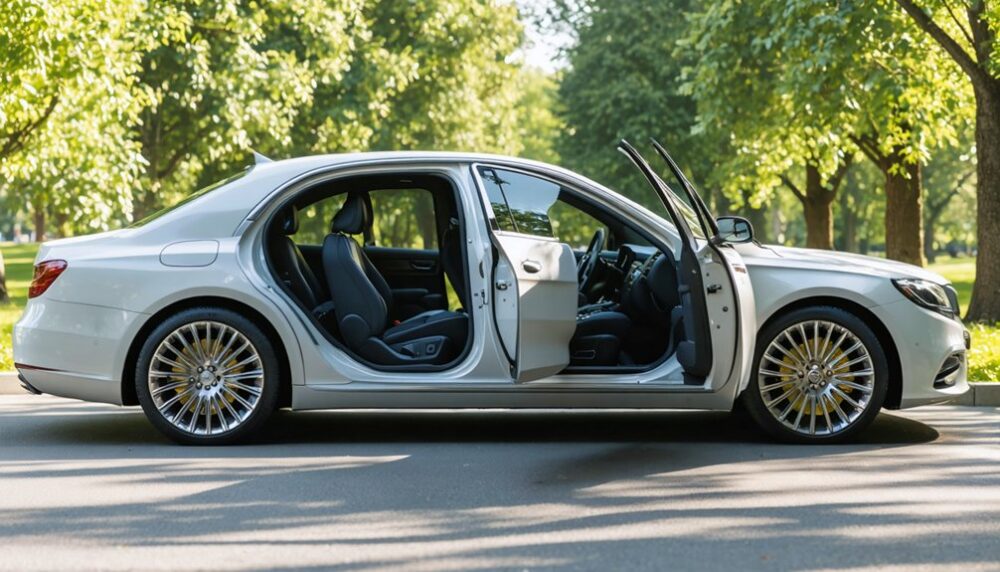

When choosing a safe family car, focus on high safety ratings from the NHTSA and IIHS. Look for advanced safety features like automatic emergency braking, blind-spot monitoring, and lane-keeping assistance. Assess the vehicle’s crashworthiness through testing results, especially for frontal and side impacts. Consider the size and weight of the vehicle, as larger SUVs often provide better protection. Exploring specific model recommendations and safety innovations can further inform your decision.
Highlights
- Look for vehicles with high safety ratings, such as IIHS Top Safety Pick+ or 5-star NHTSA ratings, ensuring optimal crash protection.
- Consider advanced safety features like automatic emergency braking, lane-keeping assistance, and blind-spot monitoring to enhance driving safety.
- Choose family cars that prioritize crashworthiness, including reinforced structures and effective restraint systems, to minimize injury risk during accidents.
- Evaluate the vehicle’s size; larger cars generally offer better protection for occupants and lower injury risks for children in the rear seats.
- Investigate real-world safety performance and maintenance costs associated with safety technologies, as these can affect long-term family budgets and safety outcomes.
Understanding Safety Ratings and Certifications
When selecting a family car, understanding safety ratings and certifications is essential, as these evaluations provide crucial information into a vehicle’s performance during crashes, offering key viewpoint. The National Highway Traffic Safety Administration (NHTSA) uses a 5-star rating system based on rigorous crash tests to assess safety standards. Meanwhile, the Insurance Institute for Highway Safety (IIHS) offers ratings of Poor, Marginal, Acceptable, or Good, encompassing both crashworthiness and crash avoidance technologies. Vehicles earning Top Safety Pick designations demonstrate outstanding performance and adhere to stringent safety certification processes. With an average of 5.5 million traffic accidents reported in 2022, families should prioritize safety ratings to guarantee their vehicle offers reliable protection for their loved ones on the road. Additionally, safety ratings create competition among automakers to improve the safety features and performance of their vehicles. Advanced driver assistance systems (ADAS) aid in crash avoidance by advising drivers of hazardous situations and activating brakes when necessary. NHTSA administers these crucial crash tests, ensuring that vehicles meet required safety benchmarks.
Essential Advanced Safety Features
Advanced safety features have become a crucial consideration for families selecting the ideal car. Collision prevention systems, such as automatic emergency braking, are now standard in vehicles like the Hyundai Palisade, utilizing sensors to mitigate impacts effectively. Additionally, many safe family cars include driver-assist tech that enhance overall safety and support the driver during travels. Lane management technologies, including lane-keeping assist and lane departure warnings, are critical for maintaining safety, especially when traveling with children. Visibility and monitoring systems, such as blind-spot monitoring and 360-degree cameras, enhance awareness of the surrounding environment. For example, the Acura MDX comes standard with the AcuraWatch suite of driver assist technologies, ensuring a safer driving experience. Moreover, these advancements in vehicle safety technology have significantly reduced fatalities in accidents, showcasing their importance. Intelligent cruise control features, encompassing adaptive cruise control, guarantee safe distances are maintained, reducing driver fatigue. Finally, pedestrian detection systems help safeguard vulnerable road users. Together, these advanced systems create a cohesive safety environment, making family travels more secure and enjoyable, and these features are essential.
Crashworthiness Testing Categories
Understanding crashworthiness testing categories is essential for evaluating a vehicle’s safety performance in the event of an accident. These categories are determined through rigorous crash protocols that assess various aspects of vehicle structure. Particularly, frontal crash tests examine the impacts on driver and passenger dummies to predict potential injuries, while side impact tests analyze structural integrity against heavy mobile barriers. The IIHS employs a four-tier rating system, from Good to Poor, to simplify evaluations for consumers. Vehicles achieve top safety ratings through reinforced structures and effective restraint systems, ensuring ideal protection for all occupants. Most vehicles that earn the highest ratings also have five-star ratings from the NHTSA, further demonstrating their superior safety performance. Additionally, vehicles such as the 2023 Ford Ranger & Ford Everest score exceptionally high in safety ratings, showcasing their commitment to child occupant protection through comprehensive safety features. Moreover, the IIHS conducts rigorous crash tests to ensure that manufacturers meet high safety standards and encourage them to improve vehicle designs continuously.
Importance of Vehicle Size and Design
Vehicle size and design play a crucial role in determining safety performance during collisions. Larger, heavier vehicles, particularly those between 3,500 and 4,500 pounds, provide significant advantages, including enhanced vehicle dynamics that reduce fatality risks in frontal impacts by approximately 50%. Their structural integrity is strengthened by modern safety cages and crumple zones that absorb crash energy. Innovations in safety design, such as reinforced materials and advanced side-impact protection, further enhance occupant safety. Additionally, larger vehicles accommodate families with practical considerations, allowing easy installation of child safety seats and improved rear passenger legroom. With a higher vantage point for drivers, awareness of surrounding traffic also increases, reinforcing the importance of vehicle size and design in family car safety, where a critical role is essential. Furthermore, choosing a vehicle with safety ratings further ensures families select a car that prioritizes protection for all occupants. Notably, the 2025 Honda Accord 4-door sedan is recognized as a Top Safety Pick+, providing families with assurance of safety features and performance. The safest vehicles of 2025 will likely feature a combination of size, structural engineering, and advanced safety features to minimize the risk of injury or death in crashes.
Top-Rated Safe Family Vehicles for 2025
As families prioritize safety in their transportation choices, the top-rated safe family vehicles for 2025 emerge as strong contenders, showcasing impressive safety ratings and innovative features. Leading the way is the Kia Telluride, recognized for its spaciousness and exhaustive safety technology, including its IIHS TOP SAFETY PICK+ rating and 5-star NHTSA rating. Other remarkable vehicles align with family needs, such as the Mazda CX-30 and Honda HR-V, both securing the TOP SAFETY PICK+ award among small SUVs. For midsize options, the Honda Pilot and Chevrolet Traverse offer exceptional safety credentials. Additionally, electric choices like the Tesla Model Y also excel in safety rankings. Notably, families are increasingly drawn to vehicles offering high safety ratings as they provide peace of mind in the event of an accident. These vehicle comparisons allow families to make informed decisions customized to their safety priorities, especially as the IIHS continuously updates crash test ratings to reflect improved safety measures.
Practical Family-Focused Safety Attributes
When selecting a family car, practical safety attributes are paramount, directly influencing the protection of occupants in various scenarios. A vehicle weighing between 3,500 to 4,500 pounds typically offers ideal crash protection, with structural reinforcements enhancing safety. Furthermore, certain models achieve IIHS Top Safety Pick+ ratings, underscoring their commitment to safety.
Key safety features include rear-seat safety enhancements like airbags and seatbelt alerts, which promote proper restraint use for children. Child seating is made easier through LATCH systems and adjustable rear-seat belts, allowing seamless shifts as children grow. Additionally, intuitive rear-door child safety locks provide driver control, ensuring little passengers are secure. Automatic Emergency Braking (AEB) detects potential collisions and automatically applies the brakes, further contributing to overall family safety.
Ample rear storage is crucial for family outings, accommodating essential gear while maintaining safety during travel. Prioritizing these attributes encourages a sense of belonging and security for families on the road.
The Role of Technology in Vehicle Safety
Advancements in technology have substantially enhanced vehicle safety, complementing the foundational features of family-focused cars. Modern vehicles are increasingly equipped with advanced systems like Automatic Emergency Braking (AEB) and Blind Spot Monitoring (BSM), substantially reducing collision rates. For instance, AEB can cut rear-end accidents and is projected to save 360 lives annually by 2029. Moreover, autonomous protocols, including sophisticated lane-keeping assistance, reinforce protection against unintentional lane drifting, consequently enhancing highway safety. In fact, autonomous vehicles are recording 40% fewer accidents than human-driven cars in controlled testing environments. Studies have shown that Electronic Stability Control (ESC) can significantly reduce single-vehicle fatal crashes. This rise in car accident fatalities emphasizes the critical need for incorporating advanced safety features into new vehicles. Regulatory standards now prioritize these technologies, ensuring new vehicles incorporate essential safety features. As families seek secure transportation, understanding the critical role of these advanced systems and protocols becomes essential, nurturing confidence that modern family cars are built with safety in mind.
Evaluating Real-World Safety Performance
Despite advancements in vehicle technology, evaluating real-world safety performance reveals important discrepancies between manufacturer claims and actual outcomes. A thorough vehicle overview shows that small SUVs present 1.73-2.45 times higher injury risk for child occupants compared to large SUVs.
Midsize SUVs also demonstrate increased risks, emphasizing the importance of understanding crash patterns. Traditional safety ratings often mislead consumers, as laboratory tests do not accurately reflect chaotic road conditions.
For example, Automated Emergency Braking substantially reduces rear-end crashes, but its effectiveness falters in less-than-ideal scenarios. Real-world data highlights the critical need for families to look beyond five-star ratings and assess actual safety performance to guarantee the best protection for all passengers, especially children. Additionally, large SUVs have a lower risk of injury to child occupants, making them a safer choice for families.
Factors Influencing Long-Term Safety and Cost
Understanding the various factors influencing long-term safety and cost is essential for families traversing the complexities of choosing a vehicle.
Vehicle age substantially impacts safety; cars older than 15 years pose a 31% higher death risk in crashes.
Such depreciation not only jeopardizes family safety but also affects long-term budgets through increased maintenance costs and safety feature upgrades.
Modern vehicles equipped with advanced safety technologies, like adaptive cruise control, can reduce fatal crash risks by up to 6% per feature.
Selecting larger vehicles, while offering superior occupant protection, presents economic trade-offs regarding pedestrian safety.
Ultimately, balancing safety features with vehicle depreciation is crucial for families committed to ensuring transport security while adhering to their budgets.
References
- https://www.auto123.com/en/news/5-safest-family-vehicles-2025-iihs-nhtsa/73274/
- https://www.youtube.com/watch?v=G4WXA2ZixD0
- https://www.hscarscompany.com/blog/family-friendly-used-vehicles-safety-reliability/
- https://www.consumerreports.org/cars/car-safety/safest-new-cars-of-2025-according-to-iihs-a3325666134/
- https://www.iihs.org/ratings/top-safety-picks
- https://www.caranddriver.com/rankings/safest-cars
- https://www.kbb.com/best-cars/safest-new-suvs-minivans/
- https://www.euroncap.com/en/ratings-rewards/safest-family-cars/
- https://www.nhtsa.gov/press-releases/nhtsa-2025-vehicles-5-star-safety-ratings-testing
- https://www.hondasouth.com/blog/2023/july/26/car-safety-ratings-explained-what-you-need-to-know.htm