

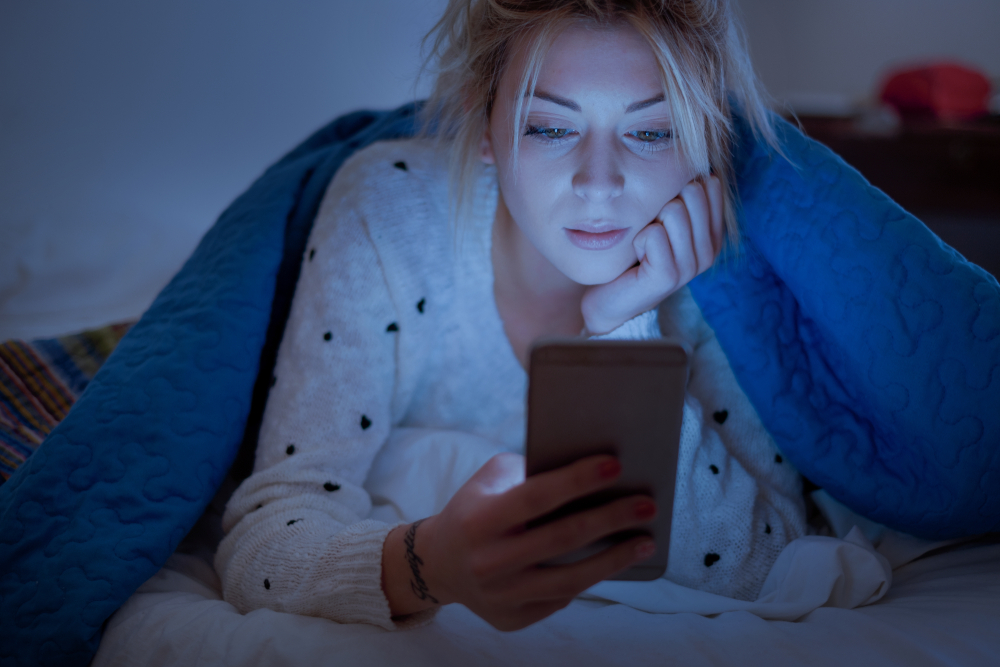

Blue light substantially disrupts sleep by interfering with circadian rhythms. It delays melatonin production, which is vital for sleep onset. During the evening, exposure to blue light heightens sensitivity and delays sleep, leading to a cascade of health issues, including mood disturbances and metabolic disorders. While morning blue light enhances alertness, its evening counterpart proves detrimental. Understanding these dynamics is essential for improving sleep quality and well-being. Uncovering effective strategies for mitigating these effects can further enhance health outcomes, as this is a pivotal aspect for sleep, and it is essential to find an energetic approach to address this issue.
Highlights
- Blue light exposure, especially in the evening, disrupts circadian rhythms and delays melatonin production, affecting sleep quality.
- Intrinsically photosensitive retinal ganglion cells respond to blue light, regulating melatonin secretion and influencing sleep-wake cycles.
- Dimming displays and utilizing blue light filters can significantly reduce blue light emission, promoting better sleep initiation.
- Limiting screen time in the evening helps maintain nighttime melatonin production, essential for healthy sleep patterns.
- Long-term blue light exposure is linked to negative outcomes like mood disturbances and chronic misalignment of circadian rhythms.
Understanding Circadian Rhythms and Blue Light
Although many individuals may underestimate the impact of light on their daily functions, understanding the relationship between circadian rhythms and blue light is crucial for maintaining peak health. Circadian cycles operate on approximately 24.25-hour rhythms, influenced substantially by blue light exposure. Intrinsically photosensitive retinal ganglion cells (ipRGCs) respond strongly to blue wavelengths, regulating melatonin secretion through signals to the brain. Morning exposure maximizes alertness and aligns circadian cycles with environmental light, while evening blue light disrupts this synchronization, heightening light sensitivity and delaying melatonin release. Consequently, excessive exposure to blue light in the evening can lead to chronic misalignment, negatively affecting both mental and physical health. Blue light waves can make it difficult to fall asleep at night, further intensifying the importance of managing light exposure. Decreasing exposure to light in the evening, and blue light in particular, helps the body prepare for sleep. Furthermore, research shows that blue light may contribute to cancer, diabetes, heart disease, and obesity, which underscores the importance of minimizing evening exposure. Prioritizing natural light exposure is essential for promoting a healthier, more balanced lifestyle.
The Impact of Blue Light on Sleep Quality
As digital screens have become ubiquitous in modern life, understanding the impact of blue light on sleep quality has gained importance for both researchers and the general public. Studies present mixed findings, with some indicating decreased sleep efficacy and tiredness linked to blue light exposure. Particularly, research indicates that exposure can alter sleep patterns, delaying sleep onset by suppressing melatonin levels. Specific studies reveal that non-blue light conditions typically improve sleep quality measures, such as restfulness and efficacy. However, other investigations show no significant changes in sleep duration or latency, suggesting individual variations in sensitivity to blue light. Ultimately, the interaction between artificial light and natural circadian rhythms remains a fascinating area for further exploration. Blue light exposure can positively affect cognitive performance, alertness, and reaction time in some individuals, highlighting the complex relationship between light exposure and sleep. Furthermore, blue light blocking glasses can help prevent light-induced reductions in melatonin secretion, which is crucial for improving sleep quality. Interestingly, while melanopsin cells are still most sensitive to blue light, the complexity of the body’s internal clock involves various factors, including meal timing and exercise, affecting sleep patterns.
Cognitive Performance and Alertness: The Blue Light Connection
The relationship between blue light exposure and cognitive performance has emerged as a fascinating area of research, particularly given the widespread use of digital devices. Studies indicate that blue light enhances alertness and reaction times, attributed to the activation of non-visual photoreceptors. Users of blue light filters consistently outperform those using standard LED screens in sustained attention tasks, demonstrating significant cognitive improvement. Additionally, blue light has been linked to focus enhancement in workplace settings, promoting task concentration and efficiency. While some studies report mixed outcomes on memory retention, the situation and duration of exposure remain critical factors. Continuous exposure to LED screen technology has been found to negatively affect mood, sleep, and cognitive performance. Moreover, research suggests that exposure to blue-enriched light is consistently associated with improved workplace performance. Notably, blue light exposure suppresses melatonin secretion, which plays a crucial role in regulating sleep cycles, highlighting the complex relationship between cognitive function and sleep quality.
Health and Wellbeing: Unpacking the Effects of Blue Light
Blue light exposure plays a significant role in influencing health and wellbeing, particularly in modern society where screens are ubiquitous. Its ability to disrupt circadian rhythms by delaying melatonin production affects not only sleep quality but also mental health. Studies show that blue light exposure can positively affect cognitive performance and alertness, highlighting the complex relationship between light and wellbeing.
Chronic misalignment caused by blue light exposure has been linked to increased risks of metabolic disorders and anxiety. While some studies indicate that physical activity may buffer these effects, others reveal inconsistent outcomes on sleep metrics. Increased irritability and mood disturbances further complicate wellbeing indicators.
Consequently, experts recommend limiting blue light exposure in the evenings and prioritizing natural light during the day, promoting a balanced lifestyle that nurtures both mental health and physical activity.
Conflicting Research Findings on Blue Light and Sleep
Research on the impact of blue light on sleep yields a mosaic of findings, often presenting conflicting outcomes that challenge the understanding of its effects. Research limitations and study inconsistencies complicate the narrative; some studies report decreased sleep quality and shorter durations linked to blue light exposure, while others find no significant changes or even improved sleep quality. Individual differences contribute to variability, with age and personal routines influencing responses. Furthermore, varying methodologies, such as exposure duration and lighting manipulation, further obscure the effects. This disconnect between subjective perceptions and objective measurements highlights the complexity of blue light’s role in sleep, leaving many to traverse their own understanding of this modern dilemma. In particular, poor sleep quality among young adults may be exacerbated by consistent blue light exposure from devices used at bedtime. Recent research suggests that dim, cooler lights in the evening may actually promote better sleep alignment compared to blue light.
Strategies to Mitigate Negative Effects of Blue Light
As individuals traverse the challenges posed by blue light exposure, implementing effective strategies can substantially enhance sleep quality and overall well-being. While blue blockers may offer limited efficacy, alternatives exist that can be beneficial. Screen management techniques, such as the 20-20-20 rule, encourage users to periodically rest their eyes. Dimming displays by adjusting color temperature to warmer tones, along with utilizing app-based filters, further reduces blue light emission. In addition, establishing pre-sleep protocols, like avoiding screens one to two hours before bedtime, plays a vital role. Environmental modifications, including using anti-glare screens and optimizing lighting, can create an atmosphere conducive to restful sleep. Moreover, it is important to note that long-term exposure to blue light can disrupt the circadian rhythm, further necessitating these strategies. Interestingly, studies indicate that blue light exposure can have phototoxic effects on certain ocular cells, emphasizing the importance of eye protection. Together, these strategies enable individuals to reclaim their nighttime routines and support healthier sleep patterns. Furthermore, blue-light filtering lenses may help reduce visual discomfort and improve sleep quality for some users, though their efficacy varies.
Optimizing Blue Light Exposure for Better Sleep
Minimizing blue light exposure before bedtime is only one aspect of enhancing sleep quality; optimizing how and when individuals interact with blue light can yield additional benefits. Utilizing blue blockers in the evening can effectively reduce melatonin suppression, promoting better sleep initiation. The timing of blue light exposure is vital; limiting screen time to earlier in the day and utilizing light therapy can enhance alertness while safeguarding nighttime melatonin production. Further research indicates prolonged exposure to blue light in the evening intensifies disruptions in the circadian rhythm.
Conclusion
In conclusion, the intricate relationship between blue light and sleep underscores the importance of managing exposure to light, particularly in the evening. While blue light can enhance cognitive function and alertness during the day, its detrimental effects on circadian rhythms and sleep quality at night cannot be overlooked. By employing effective strategies to mitigate blue light exposure, individuals can optimize their sleep environment, ultimately fostering better health and well-being, and enhancing overall quality of life.
References
- https://pmc.ncbi.nlm.nih.gov/articles/PMC9424753/
- https://www.medicalnewstoday.com/articles/blue-light-may-not-affect-sleep-wake-cycle
- https://www.physio-pedia.com/Blue_Light_and_the_Effect_on_Sleep
- https://www.sleepfoundation.org/bedroom-environment/blue-light
- https://www.sbm.org/healthy-living/blue-in-the-face-the-effects-of-blue-light-on-sleep
- https://www.cdc.gov/niosh/work-hour-training-for-nurses/longhours/mod2/20.html
- https://www.health.harvard.edu/staying-healthy/blue-light-has-a-dark-side
- https://pmc.ncbi.nlm.nih.gov/articles/PMC7065627/
- https://pubmed.ncbi.nlm.nih.gov/36051910/
- https://eyesafe.com/effects-blue-light-cognitive-performance/