

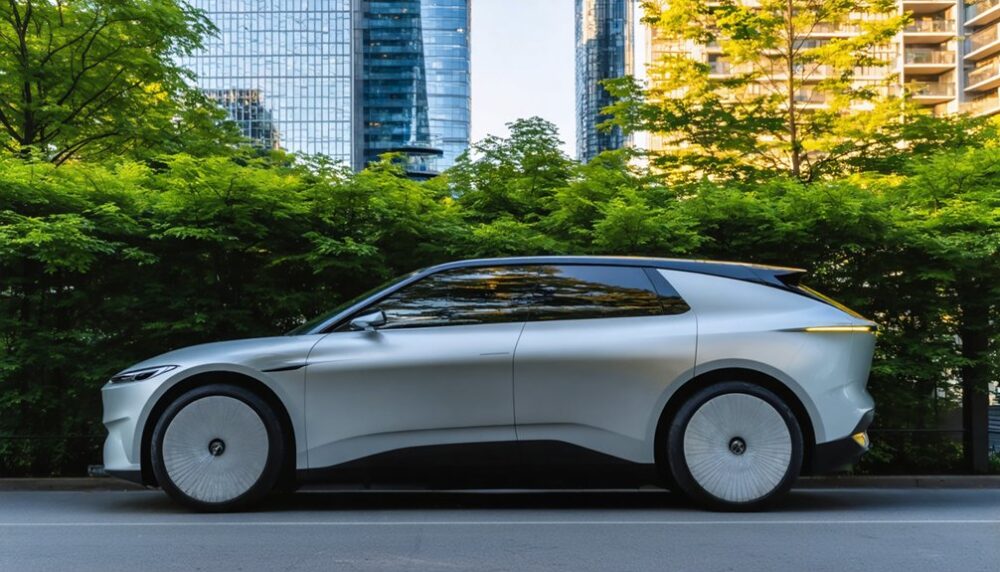

The rise of compact electric SUVs is driven by technological advancements and a growing consumer demand for sustainable transportation. Projections estimate the market could reach USD 4.33 trillion by 2030, with significant growth in the Asia-Pacific region. Leading models, like the Hyundai Ioniq 5 and Polestar 3, showcase impressive performance and range. Additionally, innovations in battery technology and charging infrastructure are enhancing their appeal. A closer examination reveals more fascinating perspectives into this rapidly developing market.
Highlights
- The compact electric SUV market is projected to grow to USD 4.33 trillion by 2030, with a CAGR of 31.9% from 2024 to 2030.
- The Asia-Pacific region dominates the market, holding over 54% share and anticipated to experience the fastest growth.
- Major automakers are increasingly developing electric and hybrid SUVs to meet consumer demand for sustainable mobility.
- Advancements in battery technology enable longer ranges and faster charging, enhancing the appeal of electric SUVs.
- Electric SUVs significantly reduce greenhouse gas emissions, fulfilling environmental concerns and aligning with consumer values on sustainability.
Market Growth Projections for Electric SUVs
As the automotive industry undergoes a revolutionary shift towards electrification, the global electric SUV market is ready for substantial growth. Valued at USD 558.34 billion in 2023, projections suggest it could surge to USD 4.33 trillion by 2030, with a compound annual growth rate (CAGR) of 31.9% from 2024 to 2030. Comprehensive market analysis indicates that the Asia-Pacific region, holding 54.28% market share, will experience the fastest growth. Strategic government incentives and declining battery costs are vital growth strategies driving this expansion. Moreover, the majority of carmakers are aligning towards the development of hybrid-driven vehicles, which is expected to further influence the electric SUV market positively. The electric SUV segment not only caters to environmental concerns but also embodies consumer desires for sustainable mobility. This growth is further supported by the 20% decrease in lithium-ion battery costs, making electric SUVs more affordable for consumers. Additionally, the global electric fleet is expected to continue expanding, reaching nearly 60 million electric vehicles by 2024, which will enhance the appeal and infrastructure support for electric SUVs.
Leading Compact Electric SUV Models
The scenery of compact electric SUVs is rapidly changing, showcasing an impressive array of models that combine performance, efficiency, and innovative technology. Leading the pack is the Hyundai Ioniq 5 N and Genesis Electrified GV70, both providing 483 hp, while the Polestar 3 Performance version offers a staggering 510 hp. Regarding range, the Polestar 3’s base model leads with up to 350 miles, closely followed by the Porsche Macan Electric at 315 miles. Additionally, the 2025 Hyundai Ioniq 5 earns top spot in the compact electric SUV segment due to retro-futuristic styling, fast charging speeds, and upscale cabin. The best electric SUVs like the Kia EV6 GT and Ford Mustang Mach-E GT provide thrilling performance, emphasizing modern SUV designs that attract environmentally conscious buyers. With competitive starting prices and advanced features like fast charging, these electric vehicles represent a strong commitment to sustainability and innovation within the automotive industry.
Performance Metrics and Rankings
Performance metrics for compact electric SUVs have become a critical focus for manufacturers and consumers alike, as they seek to balance power, efficiency, and driving enjoyment. Key metrics include 0-60 mph acceleration, torque specifications, and horsepower, with models like the Hyundai IONIQ 5 N and Ford Mustang Mach-E leading the way. Recognized vehicle ratings from sources like Edmunds and MotorTrend provide priceless data, showcasing performance-oriented trims and real-world range assessments. The IONIQ 5, for example, garnered an impressive score of 8.4 from Edmunds, while the Mustang Mach-E received a 9.2 rating. Additionally, the 2025 Hyundai IONIQ 5 boasts an estimated electric range of 318 miles, further enhancing its appeal among performance-focused electric SUVs. Consumers increasingly value these rankings as they traverse the expanding terrain of electric performance, ensuring their choices align with both quality and excitement in driving experiences. The best electric SUVs currently feature family-friendly practicality while offering impressive performance metrics.
Advancements in Technology and Efficiency
With the increasing emphasis on performance metrics in compact electric SUVs, attention has shifted towards advancements in technology and efficiency that redefine the driving experience. Battery improvements, such as the energy-dense chemistry found in models like the Mercedes-Benz GLC EQ, and capacities reaching 102-kilowatt-hours in the Polestar 4, are crucial. The introduction of 800-volt electrical architecture enables ultra-fast charging, as seen in the Hyundai IONIQ 5 and Porsche Macan EV, making charging quicker and more convenient. Moreover, innovations in charging infrastructure, including wireless and bidirectional charging technologies, allow these vehicles to not only power themselves but also contribute energy back to the grid. Such developments enhance user experience, reinforcing the community’s commitment to sustainable, innovative driving solutions, and the designer of these systems plays a key role in this process; in addition, new electric models in the market are driving advancements in these areas, which are key to the future success of electric vehicles. Notably, the rise of electric SUVs has sparked further innovation in sustainable technologies, pushing manufacturers to exceed previous boundaries in performance and efficiency. Furthermore, the integration of Voice-User-Interface technology can enhance accessibility and usability for drivers with disabilities, making the driving experience more inclusive.
Consumer Appeal of Electric SUVs
As electric SUVs gain traction in the automotive market, their consumer appeal is increasingly shaped by developing preferences and technological advancements. The growing variety of models reflects diverse design preferences, enticing buyers who desire stylish, eco-friendly vehicles. Brand loyalty plays a vital role, with many consumers keen to replace internal combustion engine (ICE) vehicles with battery electric vehicles (BEVs) as they seek alignment with environmental values. While barriers such as high prices and limited range persist, incentives like tax credits promote adoption within multicar households. Furthermore, the recent 11.4% growth in the US EV market underscores a shift in consumer interest towards electric vehicles. The electric vehicle sales in the U.S. reached an estimated 1.3 million units in 2024 suggest a significant movement towards embracing electric SUVs. The market dynamics, coupled with changing consumer attitudes, suggest a complex but promising landscape, as EV enthusiasts and newcomers alike traverse their options, aspiring to belong to the green movement while enjoying the benefits of modern SUVs, and prepare to plunge into the world of electric vehicles, considering the vital importance of this shift in the ever-changing, vibrant landscape, that they must traverse. As automakers implement strategies to counter the impact of tax credit cancellations, the potential for continued growth in the electric SUV segment remains bright.
Upcoming Models and Innovations
The electric SUV segment is positioned for significant growth, marked by an array of exciting upcoming models and innovations set to debut in the 2025 model year and beyond.
Notable products include the Hyundai Ioniq 5 with enhanced battery capacity and Tesla Supercharger access, as well as the Honda Prologue, boasting increased range options.
New entrants like the Jeep Wagoneer S and performance variants such as the Hyundai Ioniq 5 N and Polestar 3 will further diversify the market.
Innovations in charging technology, particularly with the widespread adoption of NACS ports for seamless access to the Tesla charging infrastructure, will enhance convenience for drivers.
Together, these electric trends signify a promising future of electric SUVs that promote sustainability and community, ready to plunge into a new era, and will accelerate.
Efficiency and Range Enhancements
Although the electric SUV market is increasingly competitive, manufacturers are focusing on efficiency and range enhancements to attract environmentally conscious consumers. Advances in battery efficiency are exemplified by models like the Hyundai Ioniq 9, which boasts a 110.3 kWh battery, positioning it as a leader in the segment. Charging infrastructure also plays a crucial role, with the Ioniq 5’s NACS port enabling direct access to Tesla Superchargers, expanding the charging accessibility for users. The integration of 800-volt architectures enables rapid charging, substantially reducing downtime. As compact electric SUVs continue to evolve, offering EPA-estimated ranges of up to 318 miles, they position themselves as practical alternatives for eco-conscious drivers, creating a sense of belonging within the sustainable community, and the designer of these improvements can be seen as a key engineer, which helps to turbocharge the vehicles, and that is a crucial part of the electric revolution.
Environmental Impact and Sustainability
Innovations in battery technology and charging infrastructure are not only enhancing the performance of compact electric SUVs but also substantially impacting their environmental footprint. In 2023, compact electric SUVs emerged as the most eco-friendly cars available, emitting 52% fewer life-cycle greenhouse gas emissions than gasoline counterparts. With zero tailpipe emissions, they drastically reduce carbon footprints, especially when charged from increasingly renewable energy grids. Over one-third of new SUVs sold in the U.S. are electric, substantially accelerating emissions reductions. This shift highlights that compact SUVs have overtaken sedans in terms of environmental friendliness, marking a significant change in automotive impact. As EV technology evolves, the environmental benefits become even more pronounced, minimizing overall emissions and aligning with sustainability goals. Additionally, the fact that 94% of Americans live in areas where electric cars are cleaner than 50-mpg gasoline cars underscores the broader environmental advantage of transitioning to electric vehicles. The high electrification rates of compact SUVs highlight their crucial role in creating a cleaner, more sustainable transportation scenery. Furthermore, battery electric cars produce 73% less life-cycle greenhouse gas emissions compared to gasoline counterparts, further reinforcing the sustainability advantages of compact electric SUVs.
The Future of the Compact Electric SUV Market
A significant metamorphosis is underway in the compact electric SUV market, driven by rapid advancements in technology, increasing consumer demand, and a shift toward sustainable transportation.
Market analysis forecasts a surge, with the sector set to expand from $635.10 million in 2025 to an impressive $4,489.73 million by 2032, reflecting a 35.9% CAGR.
Key electric trends include innovative models, such as the Mercedes-Benz GLC EQ and updated Hyundai Kona Electric, which promise enhanced performance and range.
Additionally, the integration of advanced technology like AI voice assistants and lidar systems signifies a revolution in user experience.
As automakers prioritize compact models, this segment is ready to become a thriving community for eco-conscious consumers embracing the future of mobility.
References
- https://www.caranddriver.com/rankings/best-suvs/electric/compact
- https://www.metastatinsight.com/report/electric-suv-market
- https://www.kbb.com/best-cars/future-electric-cars/
- https://www.recurrentauto.com/research/new-ev-market-trends-report
- https://www.whatcar.com/best/electric-suvs/n23038
- https://www.motortrend.com/style/electric
- https://www.grandviewresearch.com/press-release/global-electric-suv-market
- https://www.mordorintelligence.com/industry-reports/electric-suv-market
- https://www.grandviewresearch.com/industry-analysis/electric-suv-market-report
- https://www.alliedmarketresearch.com/e-suv-market-A13129