

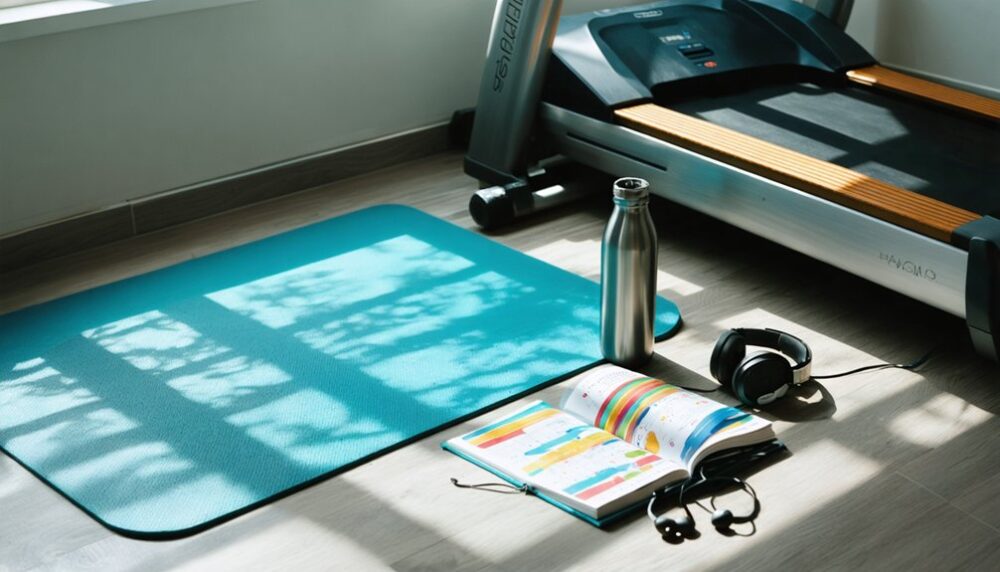

Creating a personalized fitness plan requires understanding individual factors, including biological differences and fitness levels. Conducting thorough fitness assessments helps establish a baseline to customize the program. Setting SMART goals guarantees that objectives remain actionable and aligned with personal values. Choosing engaging activities and incorporating technology enhances motivation and track progress. Regularly adapting the plan and overcoming barriers, such as time constraints, are essential for long-term adherence. Exploring these components further can lead to a more effective fitness path.
Highlights
- Assess your current fitness level through evaluations of body composition, cardiovascular endurance, strength, and flexibility to identify areas of improvement.
- Set SMART goals that are specific, measurable, attainable, relevant, and time-bound to ensure your fitness objectives are clear and achievable.
- Choose a variety of exercises focusing on compound movements and include cross-training options to enhance overall strength while minimizing injury risks.
- Incorporate technology, such as fitness wearables, for real-time tracking of performance, sleep, and recovery to personalize and optimize your workouts.
- Regularly evaluate your progress through fitness assessments and adjust your plan as needed to maintain motivation and align with evolving goals.
Understanding Individual Factors
Understanding individual factors is essential for designing an effective fitness plan, as each person’s unique physiological, lifestyle, and motivational characteristics greatly influence their exercise outcomes. Biological differences, such as genetic variations, can substantially affect how individuals respond to training stimuli, impacting adaptation rates. Additionally, structural alignment and joint mobility create distinct movement patterns that shape exercise performance. Sleep quality, nutrition, and external lifestyle stressors also play a pivotal role in readiness and recovery, emphasizing the need for a comprehensive approach. Furthermore, setting realistic, goal-oriented objectives customized to personal preferences enhances adherence and motivation. Acknowledging these factors promotes a sense of belonging and encourages individuals to accept their unique fitness path, achieving both personal and communal wellness. Thus, a personalized fitness program should be designed based on client’s initial goals to maximize effectiveness. Comprehensive assessment of an individual’s structural and functional characteristics can further enhance the customization of the fitness plan. In fact, using personalized fitness programs has been linked to a remarkable 95% success rate in achieving fitness goals within six months.
Evaluating Fitness Assessments
While evaluating fitness assessments can seem intimidating, these evaluations serve as essential tools for tailoring personalized fitness plans. Effective assessments focus on key fitness metrics, including body composition, cardiovascular endurance, muscular strength, and flexibility. Common assessment methods like Body Mass Index (BMI), VO2 max tests, and skinfold calipers provide pivotal information into an individual’s physical state. Through an exhaustive approach that combines these evaluations, fitness professionals can discern the client’s current fitness level and guide individuals in their fitness paths. Taking about 30-60 minutes, these assessments are essential for understanding how the body responds to exercise, ensuring that each fitness plan is both attainable and effective, nurturing a strong sense of community and support among participants. Moreover, these assessments also help prevent injuries by allowing trainers to tailor workouts based on individual capabilities. Additionally, fitness assessments serve as a baseline measurement to compare results over time, promoting continuous improvement in fitness levels.
Setting Personal Goals
Setting personal goals is fundamental to achieving sustainable progress in a fitness quest, as it provides direction and motivation. Through effective goal setting, individuals can define specific benchmarks, such as losing 10 pounds or completing a 5K, converting vague aspirations into concrete targets. Utilizing the SMART structure—specific, measurable, attainable, relevant, and time-bound—ensures that ambitions remain actionable and aligned with personal values. Goals should be broken down into manageable milestones, allowing individuals to celebrate small victories while tracking progress through defined metrics. Additionally, having a clear understanding of the goal helps select the right tools, routine, and exercises necessary for success. By anchoring their objectives emotionally, participants are better equipped to maintain engagement and overcome challenges. In this way, intentional fitness planning promotes a sense of belonging and community among those pursuing similar achievements. Moreover, setting specific and measurable goals helps individuals to stay motivated and focused in their fitness journey. Furthermore, achieving goals provides a sense of accomplishment and motivation, which fosters a more consistent commitment to health and fitness.
Choosing the Right Activities
Choosing the right activities is essential for crafting an effective personalized fitness plan, as the selection of exercises directly influences the achievement of individual goals. Incorporating exercise variety not only aligns with current fitness trends but also keeps individuals engaged and motivated. For peak results, individuals should focus on compound movements, such as squats and pushups, which enhance overall strength and endurance. Balancing muscle group rotations and incorporating cross-training options like swimming or yoga can minimize injury risk and promote well-rounded fitness. Additionally, progressively increasing the difficulty of exercises guarantees continued improvement without overwhelming the body. Including exercises that activate the core and posterior chain, like the bridge, can further enhance overall functional strength. Ultimately, a thoughtfully curated mix of activities promotes a sense of community among fitness enthusiasts while supporting personal growth. A personalized plan ensures that each individual’s unique goals and fitness levels are considered for optimal results. To achieve lasting success, it is critical to track progress by monitoring improvements in strength, endurance, and overall fitness regularly.
Incorporating Technology
Incorporating technology into a personalized fitness plan can substantially enhance the effectiveness of workouts, as it opens avenues for data-driven perspectives and customized experiences. AI wearables, such as smartwatches from Apple and Garmin, provide real-time tracking of physical activity, sleep patterns, and heart rate, enabling individuals to stay informed and motivated. Tech integration allows users to tailor workouts based on AI-powered personalization engines that analyze historical performance and future goals. Moreover, advanced algorithms in fitness AI platforms continuously learn from user data, optimizing future workouts for better results. AI-generated workout plans are particularly beneficial for individuals seeking motivation and consistency, as they offer suggestions based on users’ performance over time. Gamification features in fitness apps create an engaging environment through goal-setting and social accountability, nurturing a supportive community. By leveraging real-time feedback, users can adjust their workouts instantaneously to optimize their fitness results.
Monitoring Progress
Monitoring progress is a critical aspect of any personalized fitness plan, as it provides tangible perspectives into an individual’s path toward improved health and performance. Effective progress tracking involves various measurement analysis techniques, including body composition assessments, performance metrics, and health indicators. Regularly measuring weight, circumference, and strength allows individuals to see subtle shifts in their fitness path. Utilizing fitness assessments such as push-up counts or run times every four to six weeks guarantees engagement and motivates potential plan adjustments. Additionally, logging workouts and taking progress photos enhances awareness of change that might not be reflected on a scale. Coaches across countries implement periodic assessments to evaluate the progression of athletes, which can inspire similar practices in personal fitness plans. By incorporating self-monitoring into their routine, individuals can refine their efforts to focus on what truly works for their unique physiological responses. The importance of tracking progress cannot be overstated, as it not only holds individuals accountable but also highlights areas for improvement. Ultimately, consistent evaluation promotes a positive community experience, guiding members toward achieving their individual wellness goals with accountability and support.
Adapting Your Plan
Adapting a fitness plan is essential for guaranteeing that individuals continue to progress toward their goals as their abilities and circumstances develop. Personalization is key, as individuals can modify workout routines to accommodate unique needs, such as selecting squat variations based on hip structure or adjusting pressing angles for shoulder health. Additionally, the importance of personalized fitness plans is evident in their higher success rates compared to generic programs as they cater to individual physiological and psychological needs. Embracing fitness trends like progressive overload helps manage workout intensity, allowing for gradual increases in challenge without risk of overtraining. Additionally, structural compatibility assessments guarantee that exercises align with individuals’ natural biomechanics, promoting better results. By integrating corrective strategies and embracing mobility work, individuals can effectively address limitations. Adapting workouts enhances accessibility and promotes long-term adherence and success. Regular reassessment allows adaptation of workouts to changing fitness levels, maintaining motivation and a sense of belonging within a supportive community.
Overcoming Barriers
As individuals set out on their fitness travels, they often encounter various barriers that can impede their progress.
Effective time management is essential; scheduling short bursts of exercise, such as 10-minute intervals, can yield significant health benefits.
Parking further away or incorporating walking meetings also seamlessly integrates physical activity into daily routines.
Social networking plays a crucial role, as sharing fitness goals with loved ones promotes accountability and support.
Engaging family in shared exercise routines or group workouts at local organizations like the YMCA enhances motivation and commitment.
Staying Motivated
Maintaining motivation in fitness pursuits is often a complex challenge that individuals face regularly. A strong fitness mindset hinges on identifying whether motivation stems from intrinsic factors, such as enjoyment and stress management, or extrinsic factors, like physical appearance.
Research indicates that individuals driven by intrinsic motivations demonstrate greater exercise persistence. Notably, 43% of Gen-Z exercisers prioritize mental health in their routines, highlighting a shift towards deeper motivations.
Integrating technology, such as wearables, can further enhance exercise motivation by providing real-time feedback. This alignment of personal goals—whether for physical health, stress control, or improved well-being—can substantially nurture lasting engagement and community belonging, ultimately changing fitness into a sustained lifestyle choice.
References
- https://www.ptdistinction.com/blog/data-driven-personal-training
- https://achievehw.com/get-personalized-programming/
- https://neuroforceone.com/the-science-of-individualized-fitness-programs/
- https://pmc.ncbi.nlm.nih.gov/articles/PMC6352015/
- https://pmc.ncbi.nlm.nih.gov/articles/PMC8363526/
- https://acsm.org/personalized-fitness-mobile-technology/
- https://www.healthandfitness.org/improve-your-club/industry-news/new-research-consumers-value-a-personalized-fitness-experience/
- https://www.advancedwellness.com/personal-vs-personalized-fitness-training-programs/
- https://justmovefitnessclub.com/blog/personalized-fitness-program/
- https://www.novaphysicianwellness.com/post/why-you-should-have-an-individualized-exercise-plan