

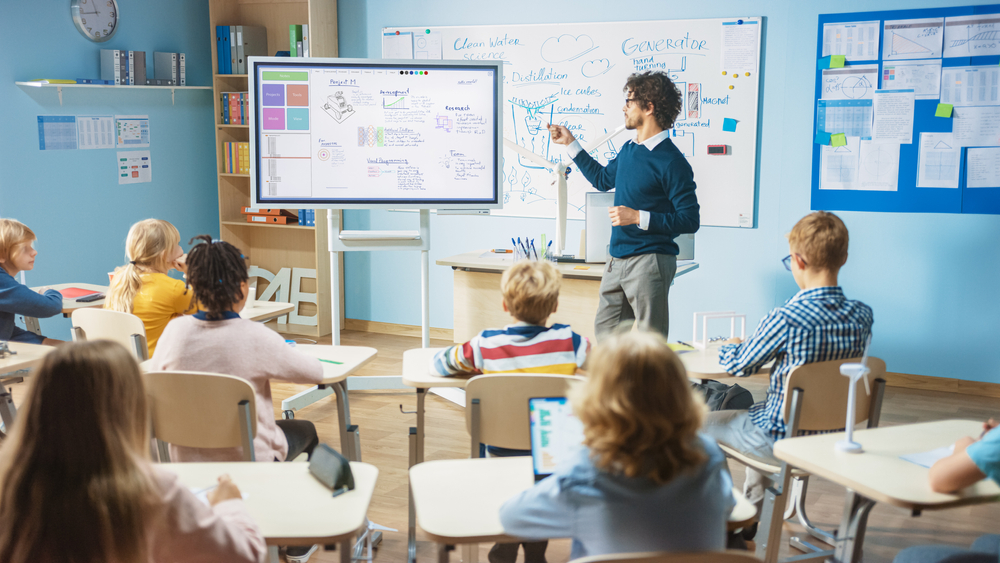

Project-based learning in digital classrooms enhances academic performance while equipping students with essential 21st-century skills. It nurtures collaboration, critical thinking, and digital literacy through hands-on experiences. Students also exhibit increased engagement and motivation as they tackle authentic problems. Additionally, personalized and inclusive approaches cater to diverse learning needs, promoting a strong sense of belonging. This educational method also emphasizes sustainable outcomes, preparing learners for real-world challenges. Exploring further reveals even more benefits of this innovative learning approach to take a plunge into.
Highlights
- Project-based learning fosters critical thinking and problem-solving skills essential for success in digital environments and real-world applications.
- Collaborative projects in digital classrooms enhance communication and interpersonal skills, preparing students for teamwork in a tech-driven world.
- Authentic problem-solving initiatives increase student engagement and motivation, leading to deeper learning experiences and better academic performance.
- Digital tools enhance project collaboration, empowering students to work effectively across various locations and disciplines, cultivating their digital fluency.
- Personalized instruction through digital platforms accommodates diverse learning needs, promoting inclusivity and narrowing achievement gaps in education.
Academic Performance Gains
Academic performance gains associated with project-based learning (PBL) in digital classrooms have been remarkably significant, as supported by a thorough meta-analysis encompassing 17 studies that revealed an impressive average effect size of 1.64.
These gains are highlighted through enhanced assessment strategies, as students demonstrate stronger learning outcomes in STEM subjects, including higher standardized test scores and improved GPAs during their initial college years. PBL effectively nurtures critical thinking and problem-solving skills, essential for academic success. Particularly, smaller student groups tend to yield superior results compared to larger cohorts, creating a conducive environment for collaboration. Furthermore, research has shown that PBL can lead to improved student achievement rates, reinforcing the effectiveness of this teaching method. This approach also significantly improved project-based learning engagement among students, fostering a deeper understanding of the subject matter.
Ultimately, these findings emphasize PBL as a powerful approach to reinforce educational achievements, promoting an inclusive and supportive learning atmosphere for all students.
Development of 21st-Century Skills
Building on the academic performance gains noted in project-based learning (PBL) settings, the development of 21st-century skills emerges as a vital benefit of this instructional approach. Through collaborative project work, students enhance their communication skills, promoting a collaborative mindset essential for success in today’s interconnected world. Active engagement in teams cultivates not only critical thinking and problem-solving abilities but also nurtures interpersonal skills as learners respect diverse viewpoints. This socially vibrant environment encourages accountability and shared decision-making, promoting a strong sense of belonging within groups. As students explore challenges together, they develop creative solutions, honing their skill development effectively. Ultimately, PBL prepares students for future pursuits by equipping them with the necessary competencies to thrive in a rapidly changing terrain, as it also fosters student responsibility for learning. Additionally, research shows that students in PBL classrooms spend more time learning through hands-on experiences, further enhancing their skillset. Furthermore, PBL aligns with 21st Century Skills, supporting deeper knowledge acquisition and skills development that are crucial for modern employment.
Enhanced Digital Literacies
Enhanced digital literacies represent a crucial component of the project-based learning (PBL) structure, enabling students to maneuver and excel in an increasingly digital world. Through PBL, students develop digital fluency and technical proficiency by utilizing platforms for video production, design, and podcasting. This hands-on approach nurtures creative thinking and application of theoretical knowledge to real-world problems, enhancing their ability to identify and solve issues relevant to contemporary society. Collaboration through digital tools enables students to work effectively across various locations and disciplines. By engaging in authentic projects, they gain confidence as digital creators, enhancing their identities in digital spaces. Ultimately, these experiences cultivate essential skills applicable in academic, professional, and personal situations, highlighting the promising results of project-based learning in various academic settings. Additionally, developing digital literacy skills is increasingly vital for students’ success in a rapidly evolving job market.
Increased Student Engagement
Digital literacies cultivated through project-based learning (PBL) forge a pathway to increased student engagement, as they enable learners to tackle real-world challenges with creativity and confidence. By focusing on authentic problem-solving, PBL prompts students to actively participate in their learning environment, nurturing collaboration and communication skills. This approach not only promotes higher-order thinking but also encourages students to ask questions and formulate solutions, enhancing their critical thinking faculties. As students engage with complex challenges, they experience personal investment in learning outcomes, reinforcing a sense of belonging. The percentage of student engagement increased with PBL which is evident in the cooperative efforts of group work, amplifying active participation and creating an interactive classroom atmosphere where each student’s input is valued, ultimately driving sustained interest and deeper educational experiences. Furthermore, students who engage in PBL demonstrate higher performance in critical thinking and problem-solving skills, solidifying the effectiveness of this learning method.
Personalized and Inclusive Learning
Personalized and inclusive learning approaches are revolutionizing the educational scenery by leveraging adaptive technologies to meet the diverse needs of students. These strategies effectively address social barriers and economic disparities, offering customized instruction that caters to individual proficiency levels. Research shows that students engaged in personalized learning programs achieve standardized test scores 30% higher than their peers in traditional settings. Moreover, adaptive technologies enhance engagement and accessibility, particularly for students with disabilities. Schools equipped with sturdy digital platforms have successfully narrowed achievement gaps tied to socioeconomic status, enabling low-SES students to perform on par with their higher-SES counterparts. Additionally, personalized learning has great potential to foster educational equity by addressing students’ varying needs and ensuring that those who are disadvantaged receive the support necessary to succeed. Furthermore, integrating inclusive education principles into these systems can transform social mindsets and promote greater participation among all learners. Importantly, data-driven strategies in personalized learning environments lead to even better outcomes for students. Despite ongoing challenges in implementation, the potential for adaptive learning to create equitable educational opportunities remains significant and promising.
Preparation for Real-World Challenges
While traditional educational models often separate theoretical knowledge from practical application, project-based learning (PBL) effectively integrates these elements, preparing students for real-world challenges. By allowing students to apply academic concepts to solve authentic problems, PBL nurtures essential life skills and promotes career readiness. Projects like the Jasper series and initiatives such as water purification encourage cross-disciplinary learning, bridging gaps between theory and practice. Additionally, collaboration within project teams cultivates communication and teamwork, essential qualities in today’s workforce. Students develop resilience through recursive problem-solving, enhancing their adaptability and critical analysis skills. Importantly, research shows that PBL can raise academic performance, leading to substantial improvements in student achievement. Ultimately, PBL creates an interactive learning environment where students thrive, establishing a foundation for future success in diverse professional scenarios, and also, collaboration encourages students to plunge into real-world issues, and this approach supports a flexible learning environment. This method not only fosters student autonomy but also empowers learners to take charge of their educational journey, further enhancing their engagement and motivation. Moreover, students participating in PBL often experience a 63% increase in social studies performance, demonstrating its effectiveness in promoting academic success.
Sustainable Learning Outcomes
Sustainable learning outcomes are increasingly recognized as a vital component of modern education, particularly within the structure of project-based learning (PBL). PBL promotes sustainable education by enhancing academic performance, evidenced by improved test scores and a deeper understanding of complex concepts, including sustainability. Students gain environmental awareness through interdisciplinary projects linking real-world challenges to core subjects, fostering critical thinking and creativity. The integration of social-emotional learning (SEL) guarantees that students develop essential collaboration and empathy skills alongside academic growth. Ultimately, PBL not only prepares learners for immediate academic success but also equips them with a strong foundation for tackling global challenges related to sustainability, enhancing their sense of belonging within the broader community, which is a vital aspect to guarantee that students feel connected and prepared, and to nurture a sense of responsibility and community. Furthermore, growing teacher collective efficacy through collaborative discussions about student learning outcomes significantly contributes to the effectiveness of PBL. Education plays a critical role in sustainable development and getting every learner climate-ready.
Conclusion
To summarize, project-based learning in digital classrooms substantially improves students’ academic performance and development of essential 21st-century skills. By promoting digital literacies and increasing engagement, this approach cultivates personalized and inclusive learning experiences. Moreover, it equips learners to tackle real-world challenges, ensuring that they not only retain knowledge but also achieve sustainable learning outcomes. Emphasizing collaboration and critical thinking, project-based learning prepares students for future success in an increasingly complex and interconnected world. Ultimately, this approach to education has a major impact, and the evidence suggests that it has a profound effect on student success.
References
- https://www.edutopia.org/article/new-research-makes-powerful-case-pbl/
- https://standtogether.org/stories/education/project-based-learning-why-we-should-embrace-it
- https://www.pblworks.org/sites/default/files/2024-03/PBL Develops Digital Literacies PBLWorks.pdf
- https://www.smartlablearning.com/project-based-learning-benefits/
- https://onlineprograms.education.uiowa.edu/blog/project-based-learning-in-stem-enhancing-student-engagement
- https://repository.usfca.edu/cgi/viewcontent.cgi?article=1661&context=diss
- https://apcentral.collegeboard.org/media/pdf/project-based-learning-boosts-student-achievement-in-ap-courses.pdf
- https://repositories.lib.utexas.edu/items/5db0ff2c-4f31-4552-8466-bf608e11f479
- https://nwcommons.nwciowa.edu/cgi/viewcontent.cgi?article=1615&context=education_masters
- https://pmc.ncbi.nlm.nih.gov/articles/PMC10411581/